Downsize finds the heavy images on your site, shrinks them safely, and keeps every original one click from coming back.
of image weight removed from WordPress sites, and counting
Built on infrastructure you already trust
Because years of uploads quietly pile up, and cleaning them up should not be a leap of faith.
A tour of the four screens you will actually use, captured from the real product.
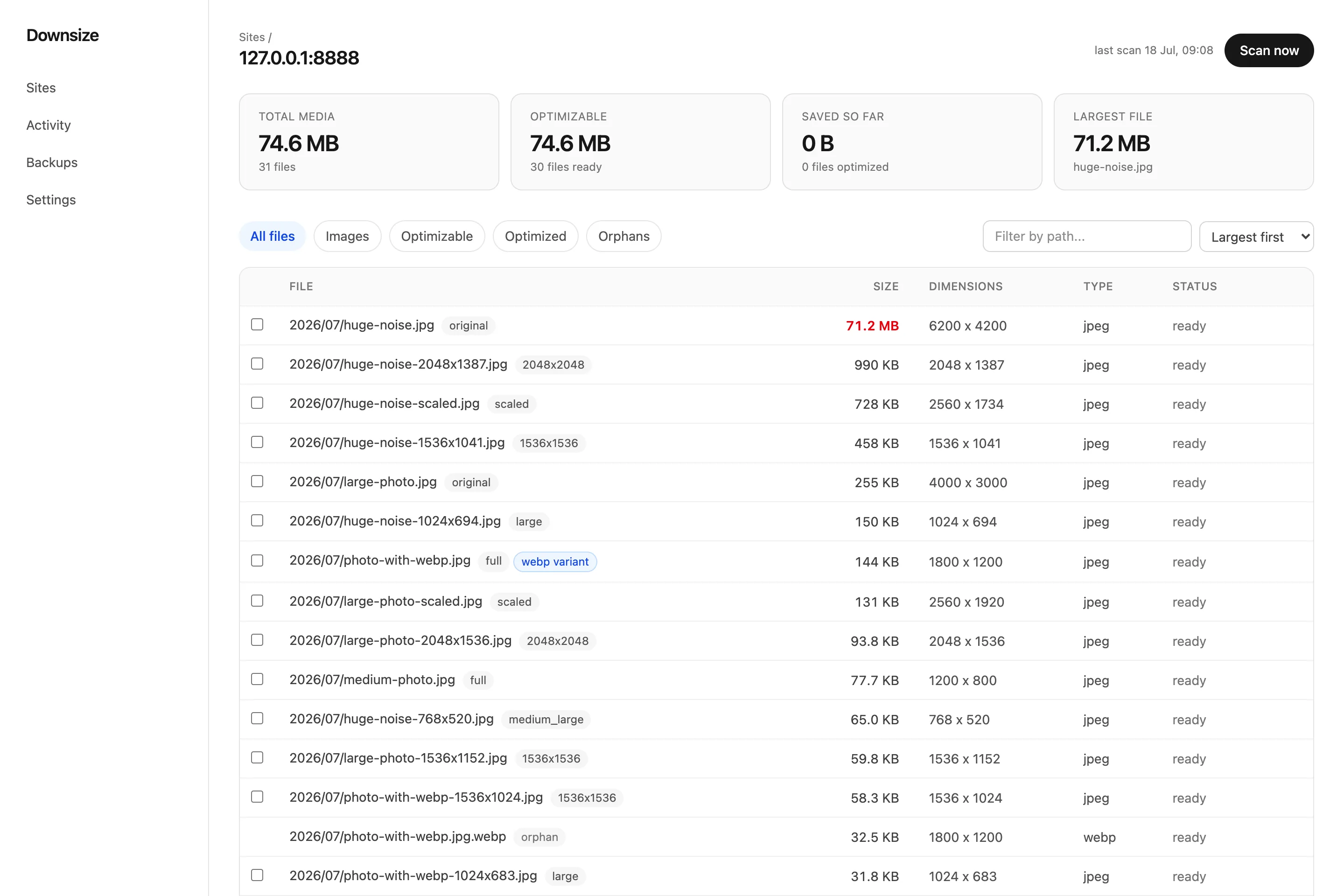
Connect a site and the first scan fills this in: total image weight, how much is optimizable, savings so far, and your largest image. It even names the single biggest file on your whole site, image or not, so you always know where the weight is.

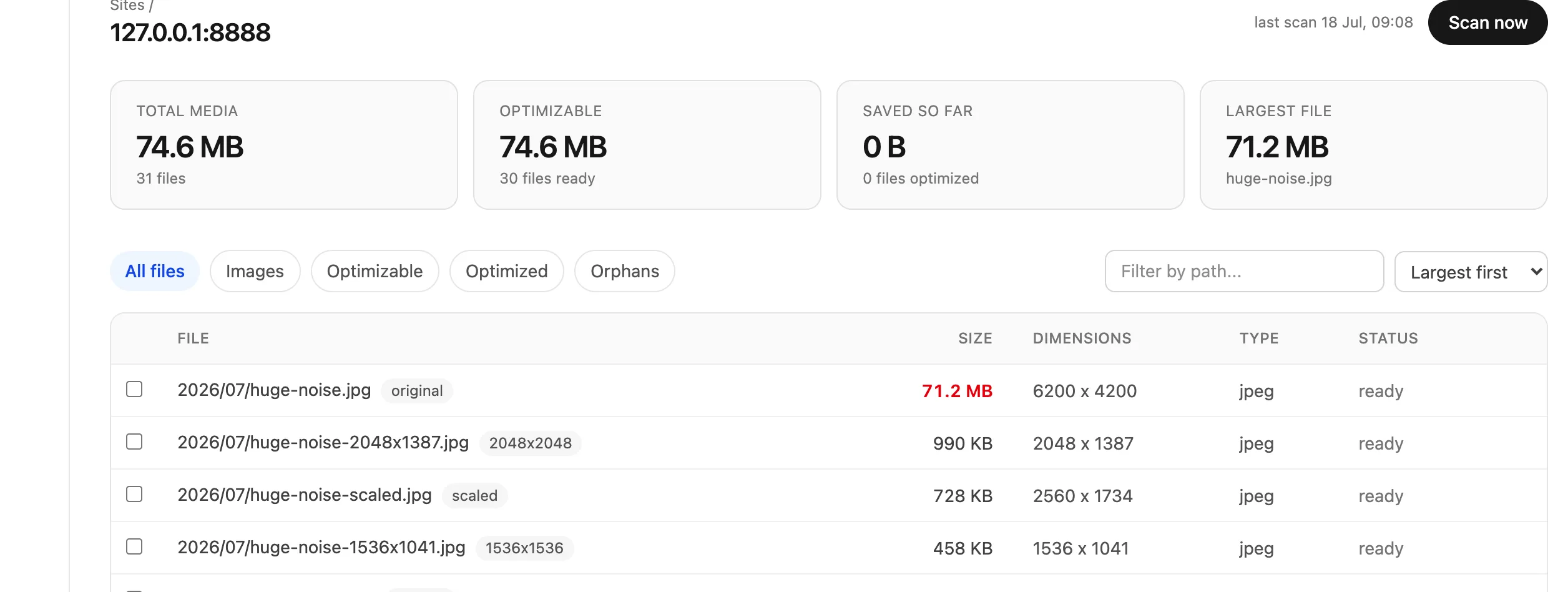
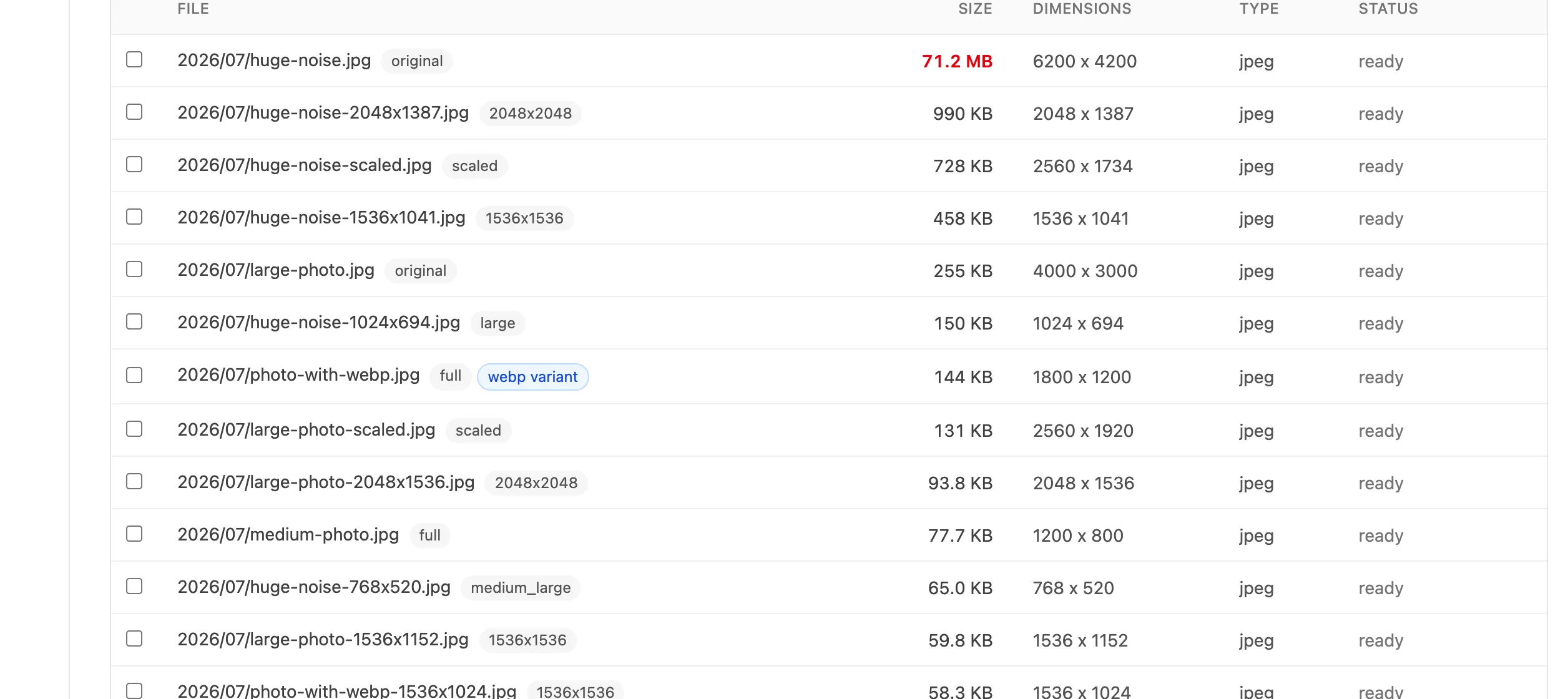
Every image with its real size, dimensions, type, and status. The list is images only, because images are all we optimize. Sort by largest first, filter to what is optimizable, select a batch, and start it. Images that should be left alone, like animated GIFs or offloaded ones, are flagged and skipped.

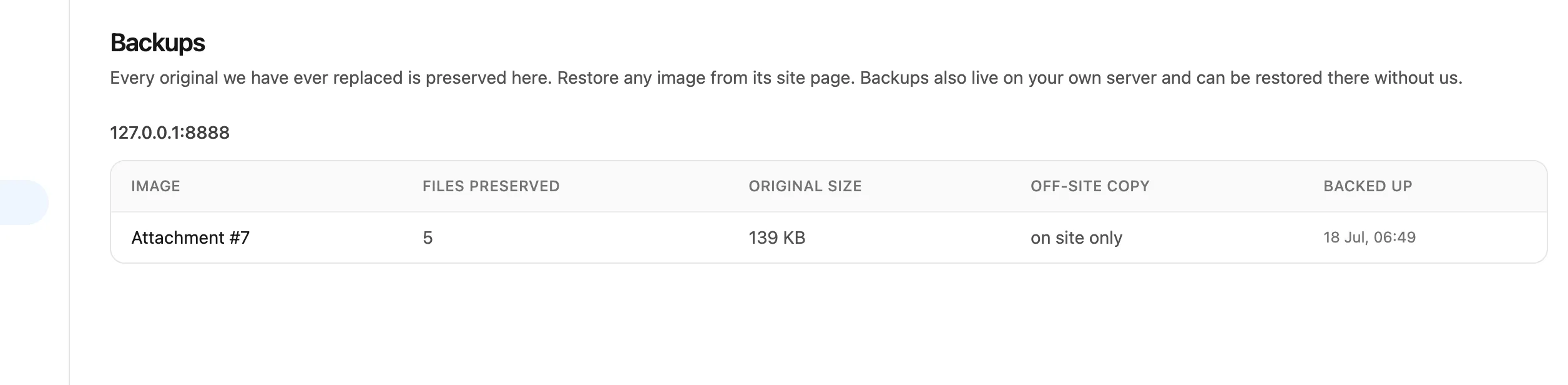
Every original Downsize has ever replaced, preserved and listed here. Restore any image from its site page. Backups also live on your own server, so they can be restored there even without us.

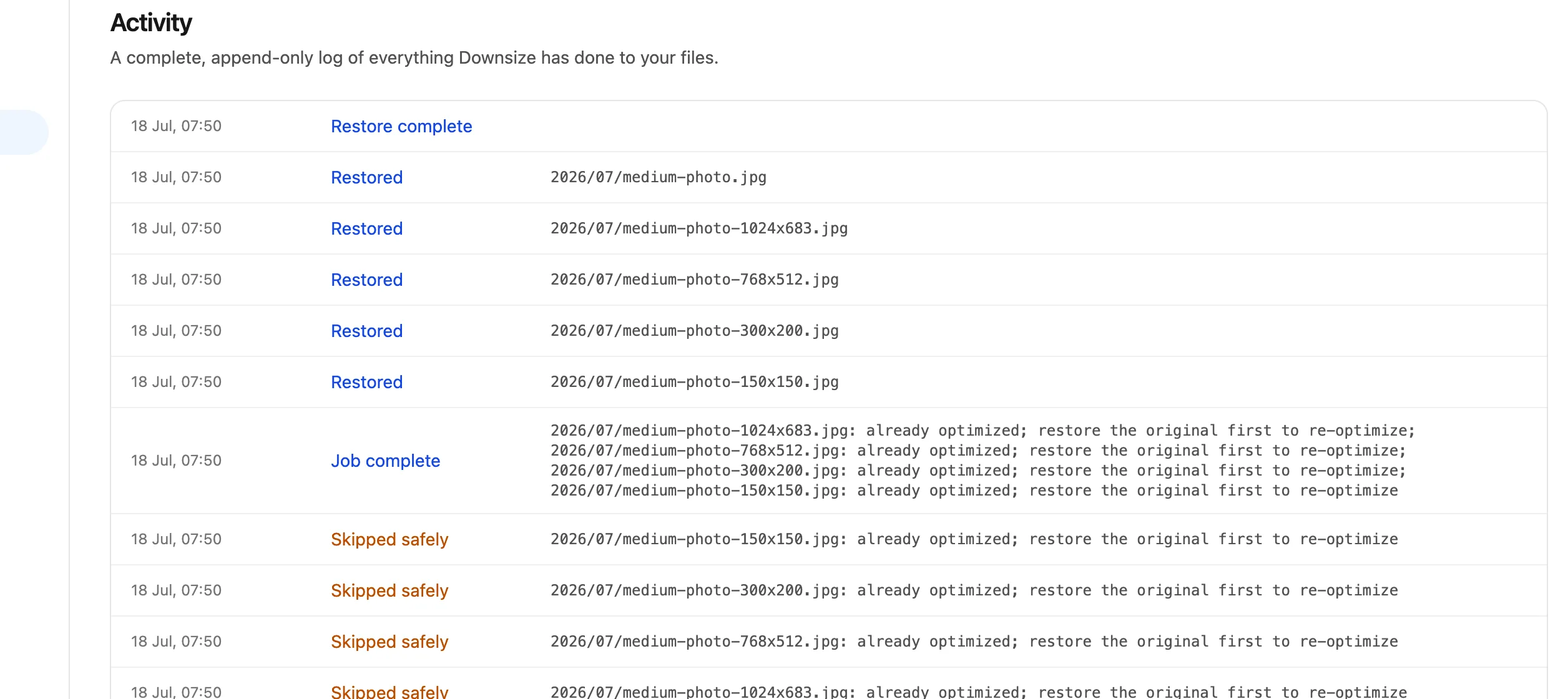
A plain-language audit trail of everything Downsize did: what was scanned, what was optimized, what was backed up, what was restored, and when. No mystery actions, ever.

Every optimization runs through the same protective pipeline. Backups are on by default, and the verification steps can never be skipped.
On by default: the original is copied to a protected folder and checksum-verified before any byte of the live file changes. Opting out is explicit, per batch.
The smaller file is written next to the original, verified, then swapped in with one atomic rename. No half-written files.
Live file, backup copy, staged file, and the final result are all hash-verified. Any mismatch stops the job safely.
Bring back the exact original from the dashboard, per file or per batch, on-site first with off-site fallback.
The backup manifest lives on your server. Restore from your own wp-admin even if Downsize is unreachable.
Your site and Downsize talk over a signed, replay-proof channel scoped to the uploads folder. No WordPress passwords involved.
This is the measured result of one optimization on a live WordPress site, followed by a full restore.
79% lighter. Same URL, same dimensions, no layout shift. The original was restored afterwards and matched byte for byte.
No fine print. These are properties of how Downsize works, not marketing claims.
Connect as many sites as you like on every plan. You only pay for how much image data you optimize.
The honest answers, including the boring safety details.
Yes, and not as a promise but as a mechanism. With backups on (the default), the original is copied to a protected folder on your own server and checksum-verified before any file is touched. The replacement is then staged, verified, and swapped in atomically, and if any check fails the job stops with your live file untouched. You can switch the backup off for a batch; Downsize warns you clearly that restore will not be possible for those images.
Restore it. One click brings back the exact original, per image or in batches, from the dashboard or straight from wp-admin. Every restore is verified against the original file hash, so what comes back is byte-identical. This needs the image’s backup to still exist, which is why backups are on by default.
No. Optimization keeps the same file path and the same pixel dimensions. Page builders, srcset variants, and hardcoded embeds keep working, and there is no layout shift.
JPEG, PNG, WebP, and static GIF images in your media library, up to 35 MB each, including thumbnails and scaled versions. That 35 MB ceiling is Imagify's per-image limit, so any image 35 MB or larger is left alone. It also deliberately skips what it should not touch: animated GIFs, files managed by offload plugins, and anything outside the uploads folder.
Yes. Backups and their manifest live on your server, and the connector plugin has its own restore screen in wp-admin. It works even with no connection to us at all.
No. You install a small connector plugin and pair it with a one-time code. After that, your site and Downsize communicate over a signed, replay-protected channel that is scoped to image operations only.
Connect a site, run a scan, and see every original size in a couple of minutes. The first optimizations are free.